
We’ll Begin with Defaults ⚙️
Our first theme invites us to think about what we think and do automatically.

Computer-based software taught a generation of us the word default when we began encountering the default settings of new tools and more recently, Apps, but the word default actually comes from religion and law. In the early 13th century, a default was an “offence, crime or sin,” and defaulting in the sense of not paying a loan first shows up in the 1800s.
These days we use the word default to mean any choice we make automatically, without thought, similar to how we use the word habit. Digital product designers and engineers will tell you how much power the default settings have, because most people will never change them. Culturally, defaults have tremendous power too, in how we spend money, what we do on weekends, how we build cities, and many more areas of life.
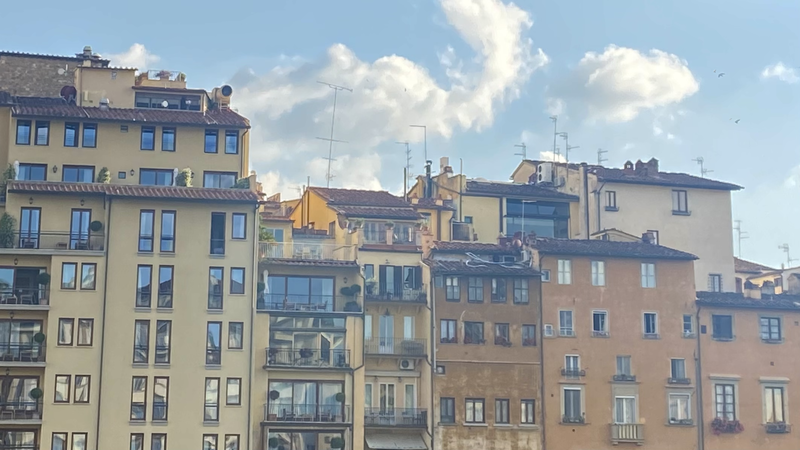
Our Default Setting as Humans is not Empathy
In 2005, in a rare public talk given at Kenyon College’s Commencement, American writer David Foster Wallace described our default settings as inherently self-centered. “Think about it,” he said, “there is no experience you have that you are not the absolute center of. The world as you experience it is there in front of YOU or behind YOU…Other peoples’ thoughts and feelings have to be communicated to you somehow, but your own are so much more immediate, urgent, real.” We can only be free when we learn to think beyond this, to be aware of the world beyond our own default setting. Wallace went on to write in his brilliant speech, which you can find in its entirety here:
The really important kind of freedom involves attention and awareness and discipline, and being able truly to care about other people and to sacrifice for them over and over in myriad petty, unsexy ways every day. That is real freedom. That is being educated, and understanding how to think. The alternative is unconsciousness, the default setting, the rat race, the constant gnawing sense of having had, and lost, some infinite thing.
What would you consider your own default settings? What do you assume is true, based on how you grew up? What do you assume isn’t true? This is the space I invite you to explore with me in the first of four Third Room Letters prompts related to the theme of Defaults.
Prompt 1 of 4: Default setting
Here are some entry points to give you ideas of where to begin:
As a kid I was taught that… Write about the defaults in your childhood home or in that of a character in your writing. What did your parents tell you over and over? Who was good and who was bad, according to their worldview? What was understood but never said?
I love/hate how machines… Write about your or a character’s relationship with a machine and its default setting. Maybe play with exaggerating things, writing an extreme opinion, and see what comes.
Do you think our default setting is selfishness, as David Foster Wallace argues? Do you think it can be changed? What is the role of learning and education? Write about why you agree or disagree with Wallace’s ideas about our default setting as humans.
Whether you write fiction, nonfiction, or something in between, I hope this prompt helps you arrive at the page today. I encourage you to ⏰use a timer, set to 15 minutes ⏰ to bound your time and stop yourself from overthinking things—I promise, it helps a lot and you’ll be surprised how much can happen in 15 minutes when you let yourself explore freely.
I’d love to read what you write about default settings, if you’re inclined to share. I invite you to send me your writing using this form, and in return I’ll read it and send you back some positive, encouraging feedback 📝💫
Happy writing your stories 💛
Willow
Hello 👋🏻 I’m Willow, and I share my writing here on Fika because I like their vision of building a better place to read, write and connect with real humans online. All photos are my own unless otherwise noted.
Comments
No comments yet. Be the first to comment!