
Raising Humans in the Age of ChatGPT
Why our kids’ questions about feelings, expertise, and connection matter more than AI’s answers

It’s funny that Daddy likes AI and you don’t, my eight-year-old daughter says, looking over my shoulder as I add photos and links to my first Fika post, What AI Can’t Know.
Her comment surprises me.
Why do you say that? I ask.
Because Daddy talks about ChatGPT all the time and you don’t, she says, bouncing next to me on the couch.
You think so? I ask.
My concentration broken, I consider what she’s just said.
DO I dislike AI? Is liking or not liking it even the right question? Where is she getting this idea? I consider her question, looking out the window over her shoulder where a flock of swallows takes off from the neighbor’s pine tree.
Impatient, she leans in, wanting me to say more. I try to explain my opinion in terms she can understand.
It’s not that I don’t like AI and Daddy does. It’s that he’s more excited about everything it CAN do and sometimes needs to remember its limits. And I think it’s important not to forget all the parts of being a person that ChatGPT ISN’T very good at, and to make sure we’re not losing connection with those.
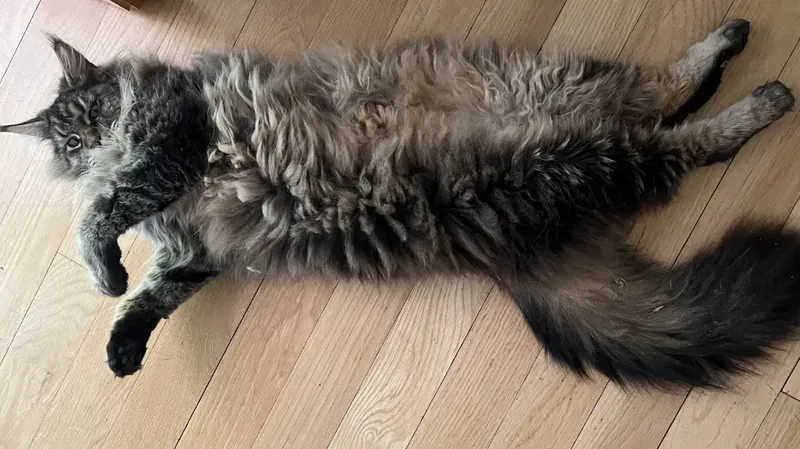
She stands up, says again, It seems like you don’t like it. Then, it’s on to the next thing now that she has Mama’s attention. I close the laptop, resigned to finishing the post later, and watch her leap from couch to couch, startling our cat who was fast asleep.
The truth is, it shouldn’t surprise me that my eight-year-old has an opinion like this. After all, her dad is an AI early adopter—someone who was experimenting with AI-based software in 2016, long before most people had heard of ChatGPT. For the last three years, hardly a day has passed without him showing us something new. The images it can make! The code it writes! The videos now! The voice explanations for your questions!
As a designer and researcher, I’m as pleased as anyone when AI automates a dull task that I used to do by hand, like having Notebook.LM spit out interview transcripts minutes, versus the dozens of tedious hours I spent transcribing my Catalan and Spanish dissertation interviews 15 years ago. Or quickly exploring logo ideas with my team before committing to the slow work of making them in a design tool.
But I use AI with caution. I ask questions about its utility for learning. I believe that to use it well, you need judgment. You need the knowledge to know what you’re asking for and to see when the information is wrong. And as a designer of learning experiences, I’m concerned about how to cultivate that.
What is appropriate AI use when you aren’t an expert? What’s the path from novice to expert in the age of AI? How do we mentor people along that path? Who supports people, if everyone is turning to ChatGPT for advice?
Especially life advice.
Did you know that in 2025, the top use case for GenAI is therapy and companionship? Yes, the very one I wrote about last week is number one, according to an infographic published by Harvard Business Review earlier this year. Number 2 and 3? Organize your life and Find purpose. As Marc Zao-Sanders writes in the full study: GenAI is not merely a tool for efficiency but is increasingly becoming an integral part of human decision-making, creativity, and emotional support.
Let’s just pause a moment on this. What does it even mean to get emotional support from a computer? What about the so-called loneliness epidemic? What will that look like in 10 years when today’s kids are becoming adults? In 30 years when their kids are in school and having problems on the playground?
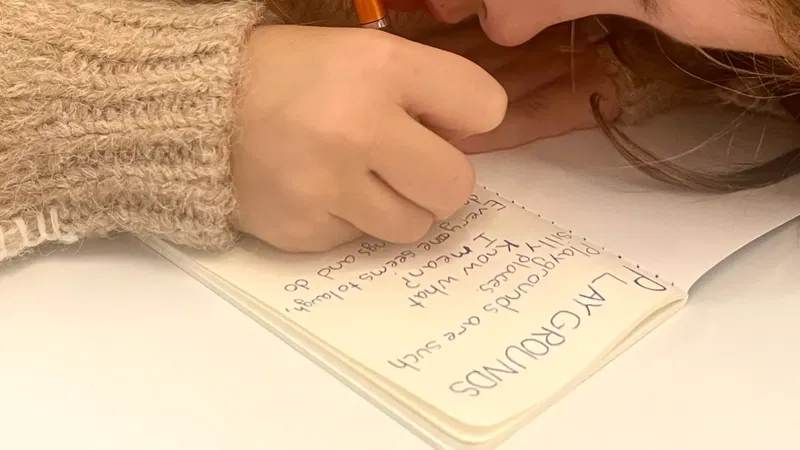
I find the eight-year-old writing in her notebook while listening to a podcast. My turn to interrupt her.
Do you think AI can help you when you feel mad?
Her answer is immediate: NO, it’s digital and has no feelings.
She looks at me like I know nothing. Her sister, reading across the room, joins in to add her opinion.
AI wouldn’t help when you feel mad AT ALL. It literally has NO feelings. She goes on, perfectly imitating the generically helpful voice of the Google. When I say, ‘I’m so angry at you!’ it’s been like, [imagine robot voice] ‘I’m so sorry, I hope I can make it up to you in some way.’
This is fun, so I decide to ask them more.
How about creativity? Is AI creative? The eleven year-old, now fully part of the conversation, doesn’t hesitate. Kind of? But it doesn’t really get things right. I asked it to make a picture of flying cats, and some of the cats didn’t even have wings!
My third kid, a teenager, is doing homework at the dining table near us. What do you think? I ask him. Can AI be creative?
I guess? It can make images?
But is that real creativity? I press, eager to hear more of what he thinks.
He looks at me, his mind on Geography and History. You ask deep questions Mom, he replies, and goes back to his homework.
Indeed I do kid, indeed I do. And you should too.
Hello 👋🏻 I’m Willow, and I share my writing here on Fika because I like their vision of building a better place to read, write and connect with real humans online. All photos are my own unless otherwise noted.

Comments
Your daughter of 8 is in the age of 'like or don't like' stage of maturity. That is why she has to see YOU that way, too! This means that social media is at the maturity of 'likes', i.e. grade-school maturity. The book "A conscious Life" by Cox, explains what is the different stages of maturity. An adult who is into their own sympathies and antipathies, only, and doesn't see the bigger social picture is what they call only a grownup, not an adult, in their definition. A real adult doesn't react just from what they, personally like, but what is better for the entire circumstance they are in.
'Adulted' adults don't have favorites. That means they know that if they like a kid more than another, it tells more about themselves than the kid. In the old days grandparents and even parents had favorites. That means that they are 'stuck' in their own feelings! This is developmentally normal when we are in grade-school, since those feelings are so newly 'found' inside themselves to experience for the first time! Your daughter cannot but interpret your behavior in any other way. She is a healthy 8 year old!
Nice writes